Basic Skills in Volleyball
Serving, passing, setting, spiking, blocking, and digging
The following are the basic skills in volleyball.
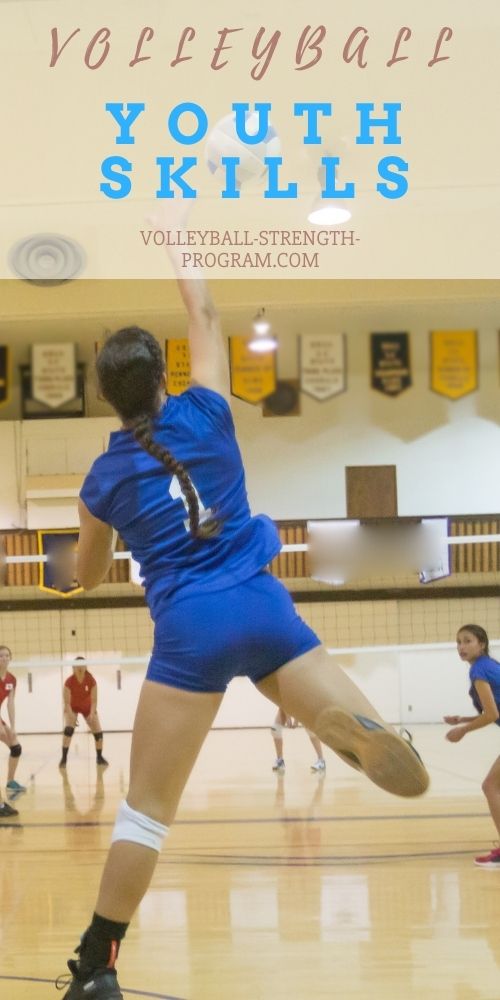
Spiking Skills
Some coaches would argue that the most important skill in volleyball is spiking.
If you can't attack, then you can't win.
You could say the object of the game is to get your team a good set to
attack. If you have players at the net that are good at spiking, and
you can get them a good set, then you'll do really well.
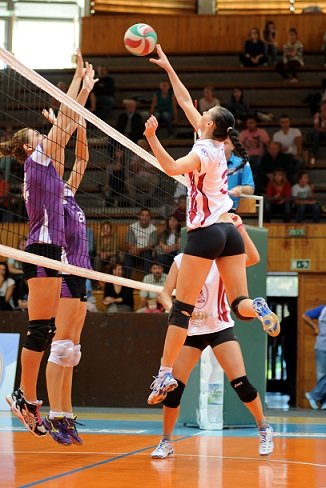
Tipping a Volleyball
Score More Points by Mastering the Basic Skills in Volleyball
The three main ways to score points in volleyball are...
- Spiking the ball to opponents floor. Or hitting the ball off a blocker. Both of these attacks result in a "kill".
- Blocking an attacker which results in the ball falling to floor. This is a "stuff block".
- A served ball that doesn't get returned. This is known as serving an "ace".
Techniques for Spiking
The following are the basic skills in volleyball for attacking.
- 4 step volleyball approach. The last two steps are right-left for right handed spikers.
- Swivel shoulder as the player is about to swing the arm forward.
- Elbow-to-wrist arm movement before contacting the ball.
- Claw hand position at pre-contact.
Serving Skills
Serving tough is very important. Many beginners make the mistake of just trying to serve the ball in the court.
Once you are able to consistently serve the ball over the net, start aiming your serves to different spots on the court.
The area of the court is divided up into 6 zones. Get good at serving to each of these zones of the court.
Also, learn to serve float serves and topspin serves.
Serving
Serving Floaters
For serving a good float serve, you need to focus on contact the center of the ball. You want to contact the
ball in way that creates a
"knuckleball" movement.
I like to think of serving a floater as "pushing" the ball. Contact the ball with a flat vertical palm.
Contact is made more out in front of the body. This is different than a
topspin serve where the contact is more above or behind the head.
Topspin Serves
Topspin serves are great to learn because this will help learning how to control the ball hitting and spiking.
I like to think of creating good topspin as "pulling the ball" as contact is made.
If you're good at "clawing" then when you make contact, it will seem as
though you're pulling the ball. The ball seems to be on your
hand longer than when serving floaters.
The goal is to create topspin and have the ball drop down into the court.
Focus on contacting the ball more back behind the head with the hand in a clawlike hand position.
Passing Skills
Passing is arguably the most important skill in volleyball.
If you can't pass, then you can't run an offense.
It's often said volleyball is a contest between the servers and the passers.
Serving tough makes it difficult to serve receive.
Digging a Volleyball
Tip: Often your team will come
up against an opponent that is more talented and experienced. It just
doesn't seem like your team
has a chance. If this is the case, a good strategy would be to take
chances with your serving. Serve aggressive and see if you
can mess up your opponents offense. A lot of times tough serving is all
you need to get your opponent playing poorly which results in
your team gaining confidence. The underdog can often pull off an upset
because of aggressive serving.
Basic skills in volleyball for passing involve "not swinging the arms".
Use the legs and shoulders when passing. There shouldn't be much arms swinging.
A common mistake beginners make is swinging the arms too much. Focus on
"not swinging" and get in the habit of using good passing
technique early on in your playing career.
If you enjoyed these tips and would like to keep it close to you at any time, just save this pin to your Pinterest Volleyball Training Board.
Volleyball › How to Play Volleyball › Basic Skills in Volleyball

Recent Articles


-
Volleyball Basics
Mar 24, 20 11:40 PM
 Volleyball basics for how to play the sport. Learn about the equipment and the rules. If you're a beginner, you need...
 -
Setter Footwork
Mar 23, 20 11:08 PM
 Setter footwork for learning how to the setter position. How to move the feet to the ball, correct drills for setting..
 -
Setter Training
Mar 22, 20 11:46 PM
 Setter training tips and techniques for creating the best drills for your setter. Learn the correct mechanics before setting in club or high school volleyball....
ACCESS MY STRENGTH SECRETS


